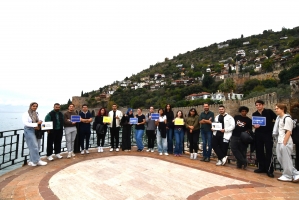
Alanya University brought participants from various cultures together around the historical heritage of Alanya with the event titled “Secrets of the Red Tower: A City Game in 800 Years of Histor...
Erasmus+
It supports the priorities and activities set out in the European Education Area, the Digital Education Action Plan, and the European Skills Agenda. It helps in the implementation of the European Pillar of Social Rights. It implements the EU Youth Strategy 2019-2027 and develops the European dimension in sport.
It offers mobility and cooperation opportunities in higher education, vocational education and training, adult and school education (including early childhood education and care), as well as for youth and sports staff.
It provides opportunities for reform in the fields of education, training, youth, and sport through cooperation, capacity building, exchange, networking, and policy support for organizations.
Core Focus Areas and Priorities:
- Inclusion and Development: It places a strong focus on social inclusion, green and digital transitions, as well as promoting young people's participation in democratic life.
- Accessibility: Erasmus+ offers activities suitable for everyone. It is more inclusive for people with fewer opportunities and more accessible for smaller organizations.
- Investing in the Future: It invests in forward-looking fields of study such as climate change, digital skills, clean energy, artificial intelligence, and health sciences.
- Key Initiatives: It supports flagship initiatives such as European Universities, Centres of Vocational Excellence, and DiscoverEU.
- Healthy Lifestyle: It promotes a healthy lifestyle by supporting grassroots sport projects.
- Global Impact: It extends mobility and cooperation opportunities beyond Europe.
| Inclusion and Diversity | Digital Erasmus+ | Green Erasmus+ |
|---|---|---|
| The aim of the new program is to increase the qualitative impact of its actions and ensure equal opportunities. To this end, the program will reach people of different ages and from diverse cultural, social, and economic backgrounds. The program will focus on people with fewer opportunities, including those with disabilities, educational difficulties, or a migrant background, as well as those living in rural and remote areas. | In line with the priorities of the Digital Education Action Plan, the program will develop accessible and high-quality digital learning opportunities. It will increase the capacity of teachers, trainers, and youth workers to use digital tools and content, test and promote distance learning, and encourage blended learning. The mobility actions of the program will create more opportunities to acquire and develop digital skills through initiatives such as Digital Opportunity Traineeships. | In line with the European Green Deal, the program will lead by example by encouraging participants to use lower carbon-footprint transportation methods as an alternative to air travel. Erasmus+ funding will also enable Europeans to acquire knowledge and build an understanding of sustainability and climate action in order to gain the competencies needed to create sustainable societies, lifestyles, and economies. |
MOBILITY OPPORTUNITIES
The best and most important activity of Erasmus+ is the mobility of students and staff. Across all sectors, approximately 10 million people—comprising students, academics, teachers, and trainers—are expected to participate in mobility activities abroad during the program.
Through the unique experience of living, studying, training, or traveling abroad, participants gain self-confidence and social skills, discover different cultures, and build social and professional ties with people from other countries. This enhances their employability, encourages their active participation in society, and contributes to greater inclusion as well as a strengthened European identity.
Erasmus Charter 2021-2027
For more details about the programme please take a look at the Turkish National Agency official web site.


